
The legend of Saint Martin
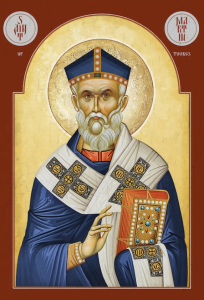 Saint Martin was a knight, monk and saint. He is capable of bringing summer to autumn and, thanks to him, we eat chestnuts every year. Here is the story behind Saint Martin’s Day, which is celebrated on 11 November.
It was the year 337, in the 4th century, and a harsh, cold autumn was ravaging Europe. Legend has it that a Gallic knight named Martin was trying to return home when he encountered a beggar in the middle of a storm who asked him for alms.
The knight, who had nothing else with him, took off 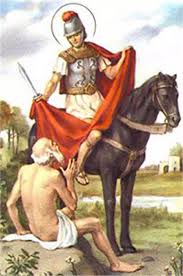 the cloak that was keeping him warm, cut it in half with his sword, and gave it to the beggar. At that moment, the storm disappeared and a bright sun began to shine.
The miracle became known as “St Martin’s summer”. Since then, around November, the harsh autumn weather disappears and the sun shines in the sky, just as it did when the knight gave his cloak to the beggar.
The famous knight in the story was a soldier in the Roman army who abandoned war to become a Catholic monk and do good.
Saint Martin was one of the leading religious figures who spread the Christian faith in Gaul (now France) and became one of the most popular saints in Europe! He is said to protect tailors, soldiers and knights, beggars and wine producers.
It was on 11 November that Saint Martin was buried in the French city of Tours, his birthplace, which is why this date was chosen to celebrate Saint Martin’s Day.
 In addition to Portugal, other countries also celebrate this day. In France and Italy, as in Portugal, roasted chestnuts are eaten. In Spain, a pig is slaughtered, and in Germany, bonfires are lit and processions are organised.
Normally, on 11 November, the first wine produced, with a low alcohol content, called água pé, is opened. This wine comes from the use of the residues from the crushing of grapes to obtain wine.
Wonderful article. Congratulations
Muito bom, já conhecia a história, mas não tão completa, parabéns.